Making your own low-poly character can be difficult.
I hear from SO many students that they have trouble making their own characters from scratch–and it's an understandable process to struggle with. The difficulty also doesn't come from not knowing how to make a character.
The difficulty is in designing and organizing your own character.
So I'm really grateful that Sorry Stacy (@sorrystacy) was able to share some amazing tips with me about how she approaches making her own characters!
Creating a base
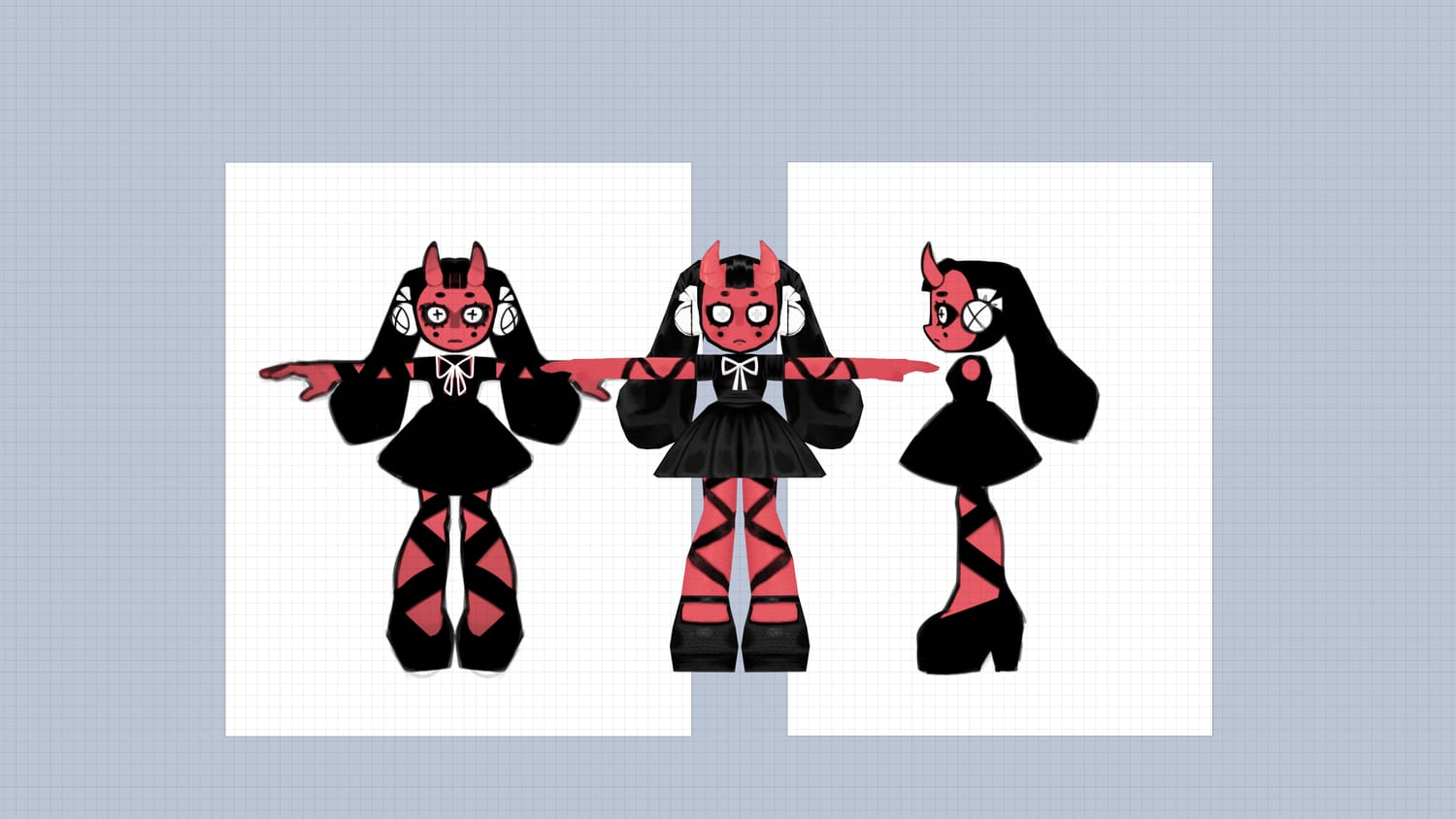
If the base of your model isn't well-defined, it'll take more work down the line to refine it. Having a great base before moving on to adding details is critical for making it easy for yourself. This is why it's good to make a clean character turnaround to make this phase easy!
It's best to define prominent shapes and block them out to give yourself a strong starting point. Following a turnaround can eliminate guesswork and make you more confident in what you're making! Beginning to experiment with colors or creating a palette is also great during this stage, as it can inform some decisions about the blockout and vice versa.
To build a great palette, sites such as Lospec are incredible for finding an existing palette or for getting inspiration. Make sure to use your resources!
Use basic tools
While it's also tempting to use plugins and tools such as Rigify, some tools that take the work out of it for you can be detrimental shortcuts. It's incredibly helpful to learn how to make a proper rig or improve an aspect of the model on your own.
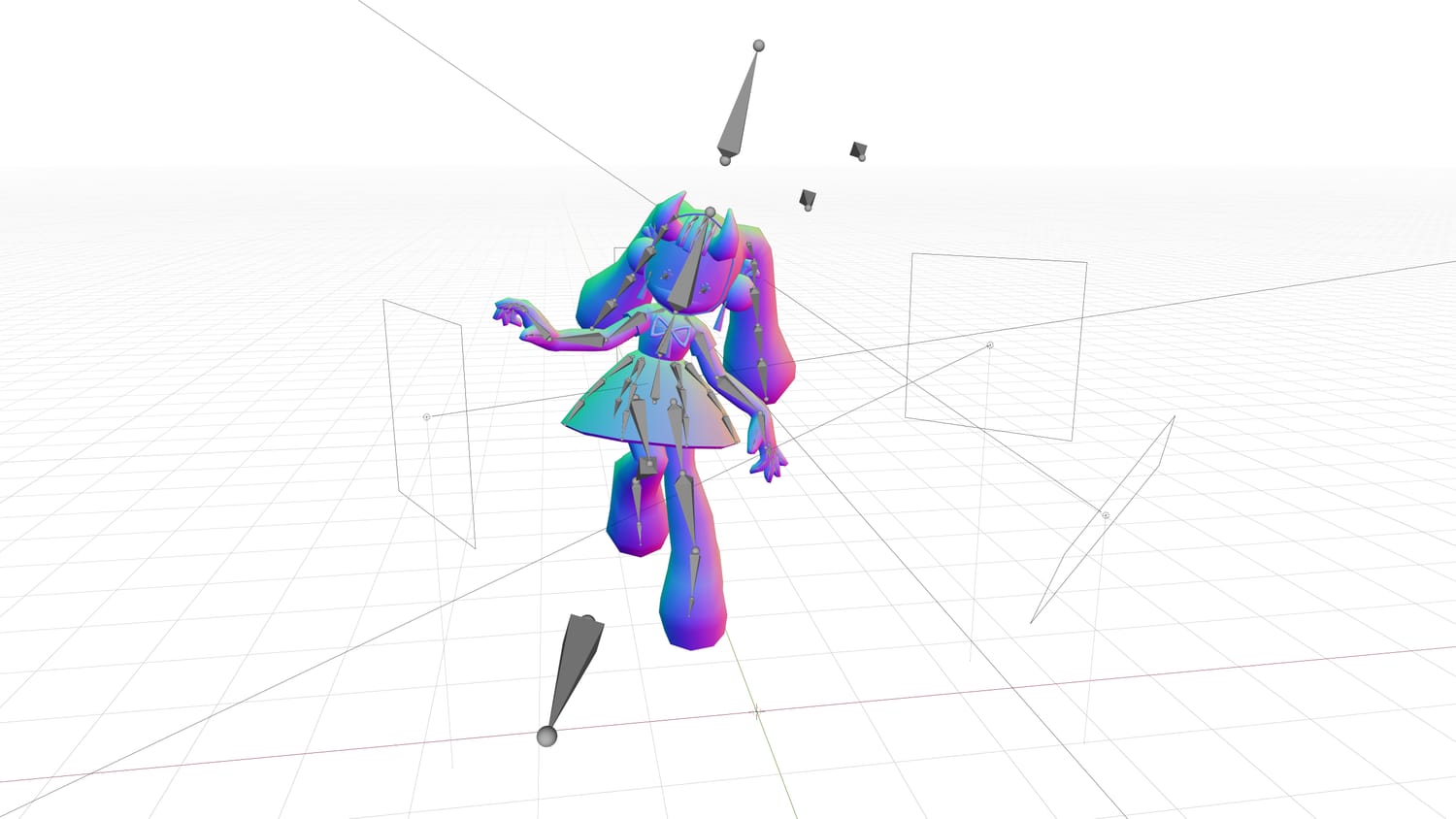
When you do something on your own, it serves as practice and helps improve your own understanding of what tools and plugins do for you. Tools also don't cover every use case–sometimes, you may have to do things yourself; and it's better to understand what you're doing rather than winging it.
Growing your knowledge by doing it yourself will make more advanced techniques easier to understand and implement in the future. Being patient with the process is one of the most important things to keep in mind.
Keep it simple
When building your character, it's best to use simpler shapes such as cubes and cylinders and modify them as needed. For low poly specifically, these simple shapes usually work great, and they come with good topology already.
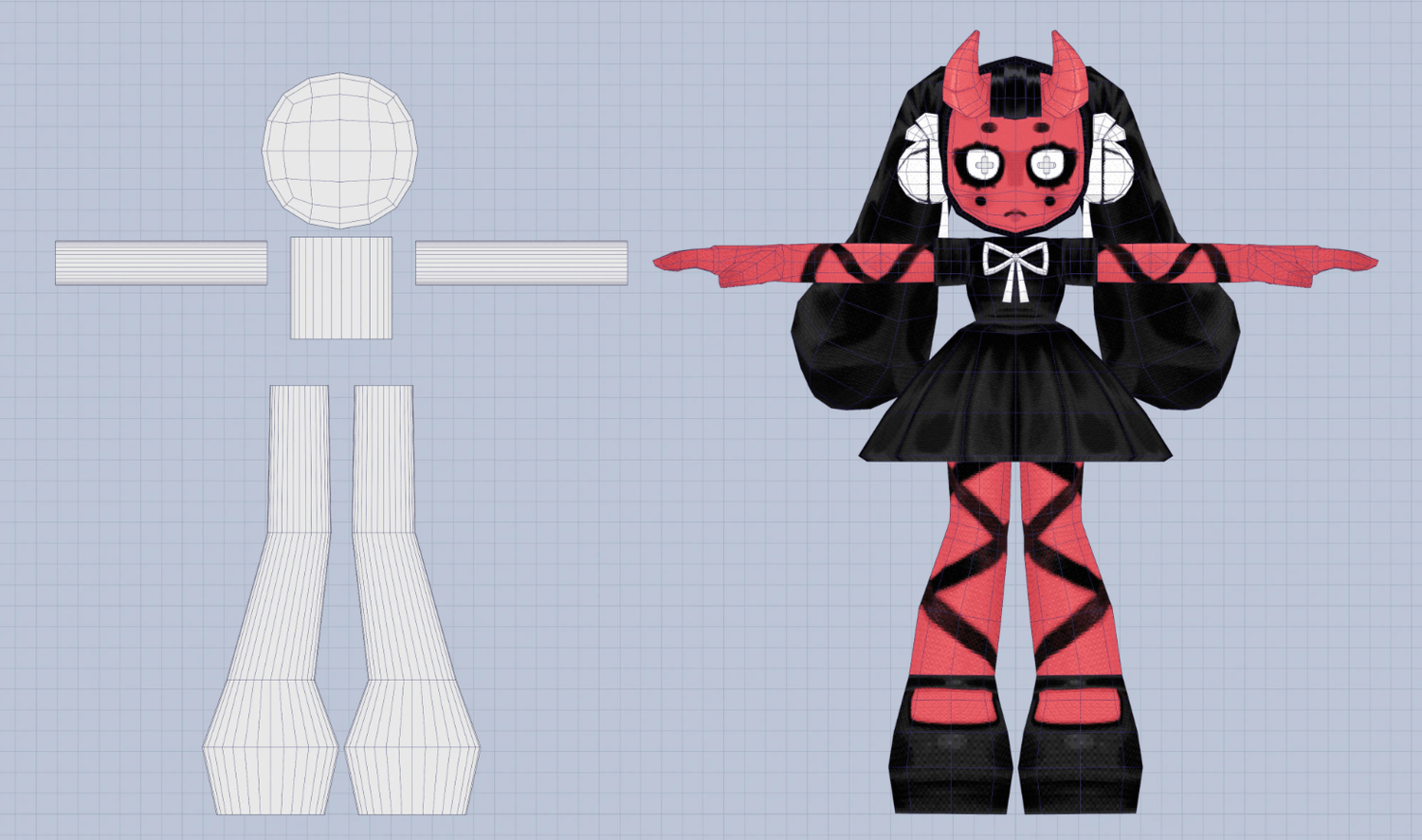
In the example above, you can easily see how the base of the character is made up of cylinders and a sphere with very little modification done to those shapes, apart from basic transformations.
You also save yourself work when you keep it simple. Modifiers such as the Mirror modifier can save you so much work and make the project more manageable as a whole.
Avoid sculpting as well; sculpting often creates messy topology which can be a headache to clean up in later stages of modeling. Oftentimes, issues can arise late in the process and require an excessive amount of work to correct. Sculpting is often prone to this issue.
Stay organized
It can be easy to lose track of a specific object or resource in your project if it's not named or organized properly. Leverage folders and collections to keep different parts separated and easy to find!
Naming your objects properly is also an easy way to make it straightforward to find specific parts of models. Without doing that, it's easy to forget what the point of some objects might have been.
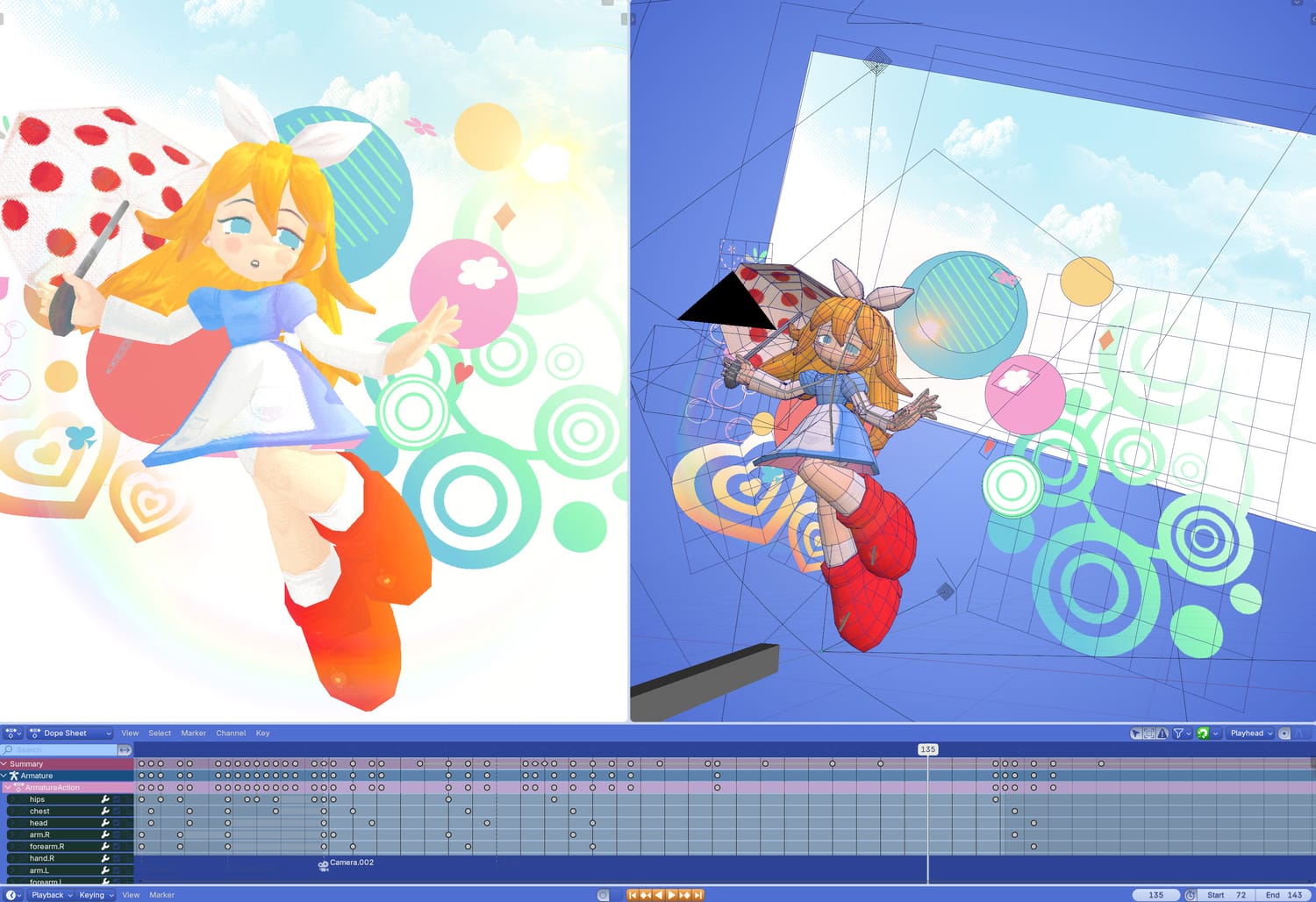
Properly maintaining your rig is also critical! Employing a naming convention and leveraging symmetry go a long way and prevent so many headaches later in the process. The screenshot below shows Sorry Stacy's own naming convention for a rig used in Digital Alice:
Use tutorials and references
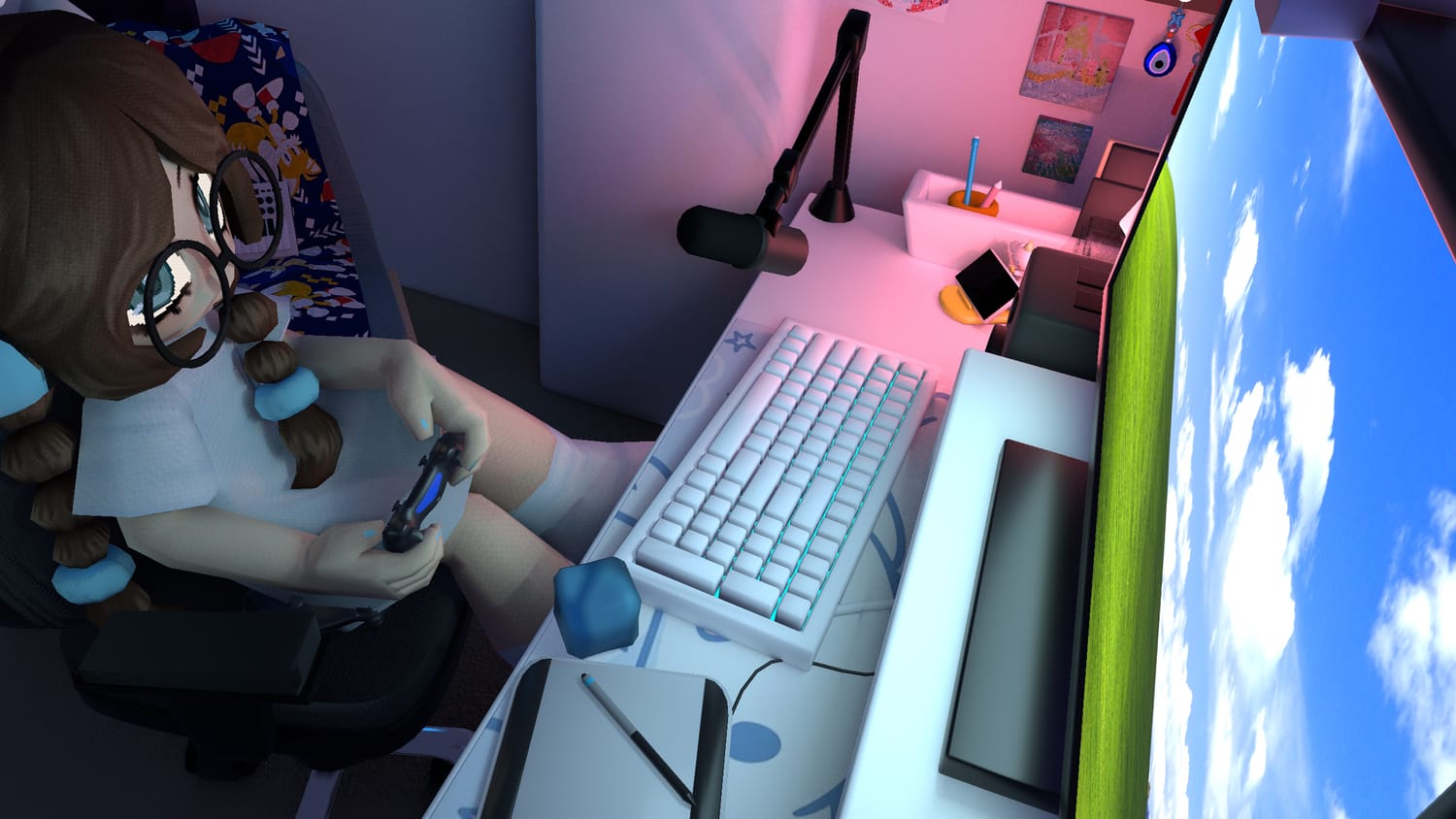
It's easy to get stuck on a project due to not knowing how to do something or how something should look. That's why using tutorials or other resources other people have made is incredibly valuable; there's so much fantastic content that can teach you anything you need to know from your bedroom!
So many completely free resources such as reference sheets, tutorials, or threads are available on YouTube, Pinterest, and 3D software forums. There's help for most specific issues, so you never have to try to do something completely on your own! All it takes is a specific search, and it's likely you'll find something that helps you move forward.
Thank you so much to Sorry Stacy for sharing these tips with me! Creating a low-poly character from scratch can be incredibly daunting, but there are so many resources out there to help beginners make something amazing!
Low-poly characters in particular are incredibly approachable–the style keeps the topology simple, so it's a great place to learn and it gives beginners so many skills to use for higher-poly characters! That's why I made my own Low Poly Character course that gives results in just a few hours.
I've had thousands of students go through my course and create their own low-poly character, even without any prior experience.
If these tips got you excited, you're going to love Sorry Stacy's channel. She makes character design look actually doable — go hit subscribe and see for yourself! 🎨 Check out Sorry Stacy on YouTube